Devonian Fossils

Image credit: Wikimedia Commons
The Devonian Period spanned approximately 408–360 million years ago and is often called the “Age of Fishes” because almost all major groups of fish appear during this time. It was also the “age of ancient coral” — more types of (now extinct) coral appear in the Devonian than in any other Paleozoic period.
The name “Devonian” comes from Devonshire (Devon), a county in England, and was introduced by British geologists Adam Sedgwick and Roderick Murchison in 1839. In the Kentuckiana area, Middle Devonian fossils are found mainly in the Jeffersonville Limestone (about 390 million years old) and the North Vernon Formation (also known as the Sellersburg Group, including the Silver Creek and Beechwood members, dated at ~380 million years old). The New Albany Shale spans from the Middle Devonian through the Early Mississippian and contains relatively few fossils.
For more information about Devonian corals of this region, see Kentucky Fossil Corals of the Silurian and Devonian Rocks of Kentucky by William J. Davis, available here: http://www.uky.edu/OtherOrgs/KPS/fossilcorals/index.htm .
The Kentucky Paleontological Society also hosts A Monograph of the Fossil Shells of the Silurian and Devonian Rocks of Kentucky by Henry Nettelroth, available here: http://www.uky.edu/OtherOrgs/KPS/books/nettelroth/nettelroth.htm
Another useful classic reference is Paleontology Fossil Corals by Dr. C. Rominger (1876), available here: http://www.archive.org/stream/palontologyfos00romi .
Scroll down and select the name of a fossil to view its image on its own page. Use your browser’s Back button to return here after viewing an image. Some images may be larger than your display resolution; click on the image to expand it.
 Annelids
- Gitonia coralliphili Clarke (annelid worm tubes) in Heliophyllum sp. (horn coral), Middle Devonian, Jeffersonville Limestone, Charlestown, Clark Co., IN

 Blastoids (Echinodermata)
- Elaeacrinus verneuili (Roemer), Jeffersonville Limestone, Speed, Clark Co., IN
- Elaeacrinus verneuili (Roemer), Jeffersonville Limestone, Utica, Clark Co., IN
- Elaeacrinus verneuili (Roemer), Jeffersonville Limestone, Utica, Clark Co., IN


 Brachiopods
- Amphigena elongata (Hall), rare specimen from the coral zone, Middle Devonian, Jeffersonville Limestone, Jeffersonville, Clark Co., IN
- Athyris fultonensis (Swallow) with exposed lophophore, Clark Co., IN
- Athyris fultonensis (Swallow), Jeffersonville Limestone, Speed, Clark Co., IN
- Barroisella sp. inarticulate brachiopod, Beechwood Limestone, Hollywood Springs, KY
- Devonochonetes sp. , Silver Creek Limestone, Speed, Clark Co., IN
- Lindstroemella aspidum (Hall & Clarke), inarticulate brachiopod attached to fenestrate bryozoan, Jeffersonville Limestone, Jeffersonville, Clark Co., IN
- Lingula sp. , Silica Shale Formation, Sylvania, Lucas Co., OH
- Mediospirifer segmentum? North Vernon Formation, Speed, Clark Co., IN
- Megastrophia hemisphericus (Hall) (or M. concava (Hall)), Middle Devonian, Jeffersonville Limestone, Jefferson Co., KY
- Mucrospirifer sp. , Silica Shale Formation, Sylvania, Lucas Co., OH
- Paraspirifer acuminatus (Conrad), Deputy–Swanville Formation, Jeffersonville, Clark Co., IN
- Paraspirifer acuminatus (Conrad), Deputy–Swanville Formation, Jeffersonville, Clark Co., IN
- Paraspirifer sp. , Silica Shale Formation, Sylvania, Lucas Co., OH
- Protoleptostrophia perplana (Conrad), Speed Limestone, Speed, Clark Co., IN
- Pseudatrypa sp. , Jeffersonville Limestone, Speed, Clark Co., IN
- Pseudatrypa sp. , geodized brachiopod, Middle Devonian, North Vernon Formation, Clark Co., IN
- Pseudoatrypa sp. , Jeffersonville Limestone, Speed, Clark Co., IN


 Bryozoans (Moss Animals)
- Coscinium cribiformis (Prout), Jeffersonville Limestone, Jefferson Co., KY
- Eridotrypa sp. , Speed Limestone, Speed, Clark Co., IN
- Fenestrate bryozoan , Middle Devonian, Jeffersonville Limestone, Louisville, Jefferson Co., KY
- Fistulipora sp. , Middle Devonian, Silver Creek Limestone, Jefferson Co., KY
- Hederella sp. encrusting Orthospirifer fornacula (Hall), Middle Devonian, North Vernon Formation, Jeffersonville, Clark Co., IN


 Cephalopods (Mollusca)
- Nautilus maximus Conrad, Middle Devonian, Jeffersonville Limestone, Speed, Clark Co., IN

 Clams (Pelecypods / Mollusca)
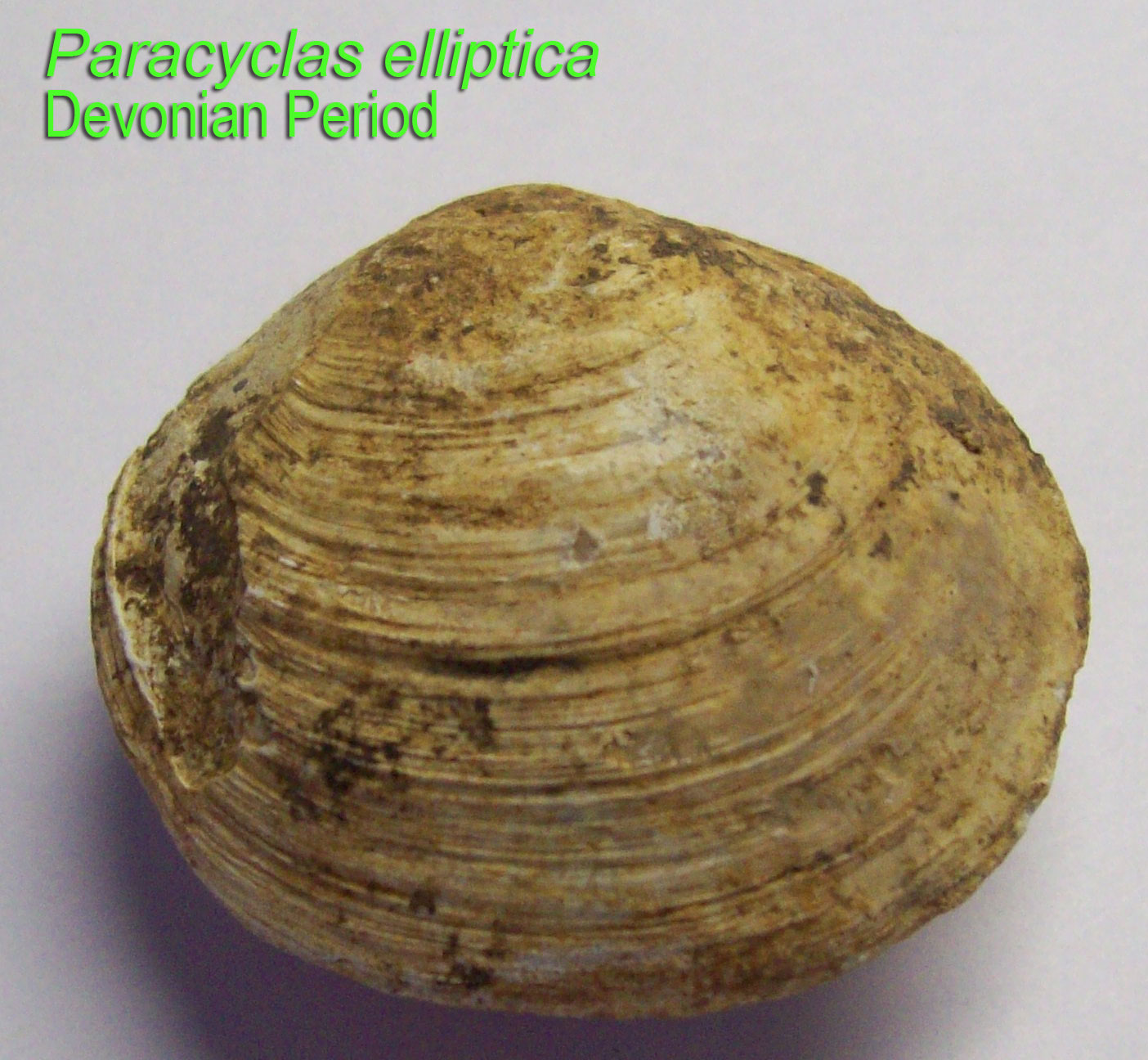
- Paracyclas elliptica (Hall), Jeffersonville Limestone, Clark Co., IN
- Paracyclas elliptica (Hall), Jeffersonville Limestone, Clark Co., IN
- Paracyclas lirata (= P. rugosa) (Hall), Jeffersonville Limestone, Clark Co., IN
- Paracyclas lirata (= P. rugosa) (Hall), Silver Creek Limestone, Louisville, Jefferson Co., KY
- Pseudaviculopecten princeps (Hall), Middle Devonian, Jeffersonville Limestone, Jefferson Co., KY


 Corals (Cnidaria)
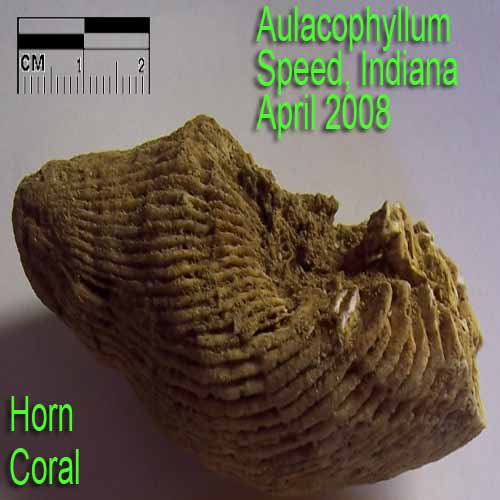
- Aulacophyllum sp. horn coral, Speed, Clark Co., IN
- Aulocystis frutectosa (Davis), Middle Devonian, Beechwood Limestone, Jeffersonville, Clark Co., IN
- Aulocystis sp. , Silica Shale Formation, Sylvania, Lucas Co., OH
- Aulopora sp. , Silica Shale Formation, Sylvania, Lucas Co., OH
- Chonostegites tabulatus (Edwards & Haime), Jeffersonville Limestone, Jeffersonville, Clark Co., IN
- Craterophyllum magnificum (Billings), Jeffersonville Limestone, Clark Co., IN
- Cystiphylloides sp. , Jeffersonville Limestone, Clark Co., IN
- Cystiphylloides sp. horn coral, Speed, Clark Co., IN
- Cystiphylloides sp. horn coral, Jeffersonville Limestone, Speed, Clark Co., IN
- Enallophrentis inflata (Hall), Jeffersonville Limestone, Utica, Clark Co., IN
- Enallophrentis inflata (Hall), Jeffersonville Limestone, Lyndon, Jefferson Co., KY
- Favosites (Emmonsia) emmonsi (Hall), Middle Devonian, Jeffersonville Limestone, Louisville, Jefferson Co., KY
- Favosites (Emmonsia) epidermata Rominger, Middle Devonian, Jeffersonville Limestone, Louisville, Jefferson Co., KY
- Favosites turbinatus (Billings), “kneecap coral,” Jeffersonville Limestone, Speed, Clark Co., IN
- Favosites turbinatus (Billings), “kneecap coral,” Jeffersonville Limestone, Speed, Clark Co., IN
- Hadrophyllum orbignyi Edwards & Haime, button coral, Speed Limestone, Speed, Clark Co., IN
- Hadrophyllum orbignyi Edwards & Haime, Speed Limestone, Oldham Co., KY
- Heliophyllum sp. horn coral, Jeffersonville Limestone, Speed, Clark Co., IN
- Heliophyllum sp. horn coral with Favosites clausus (Rominger), Jeffersonville Limestone, Speed, Clark Co., IN
- Heliophyllum venatum horn coral with borings, Jeffersonville Limestone, Speed, Clark Co., IN
- Heliophyllum verticale Hall, horn coral, Jeffersonville Limestone, Louisville, Jefferson Co., KY
- Siphonophrentis elongata (Rafinesque & Clifford), horn coral that could reach 60–80 cm in length, Middle Devonian, Jeffersonville Limestone, Louisville, Jefferson Co., KY
- Stereolasma gallicalcar (Davis), Middle Devonian, Beechwood Limestone, Jeffersonville, Clark Co., IN
- Tabulophyllum sp. horn coral, Jeffersonville Limestone, Speed, Clark Co., IN
- Tabulophyllum sp. , Jeffersonville Limestone, Louisville, Jefferson Co., KY
- Tabulophyllum zaphentiforme , Beechwood Limestone, Clark Co., IN
- Thamnoptychia alternans (Rominger), Middle Devonian, Beechwood Limestone, Jeffersonville, Clark Co., IN
- Zaphrentis phrygia (Rafinesque & Clifford), Jeffersonville Limestone, Louisville, Jefferson Co., KY
- Zaphrentis phrygia (Rafinesque & Clifford), Jeffersonville Limestone, Louisville, Jefferson Co., KY (calice view)
- Zaphrentis phrygia (Rafinesque & Clifford), Jeffersonville Limestone, Louisville, Jefferson Co., KY


 Crinoids (Echinodermata)
- Ancyrocrinus spinosus Hall, North Vernon Formation (Beechwood Limestone), Speed, Clark Co., IN
- Ancyrocrinus sp. , Beechwood Limestone, Speed, Clark Co., IN
- Ancyrocrinus sp. , Beechwood Limestone, Speed, Clark Co., IN
- Dolatocrinus sp. , Middle Devonian, Beechwood Limestone, Jeffersonville, Clark Co., IN
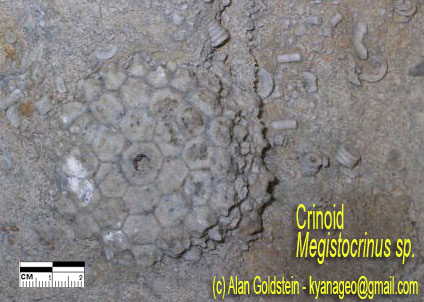
- Megistocrinus sp. , Middle Devonian, Beechwood Limestone, Jeffersontown, Jefferson Co., KY
- Scyphocrinites? sp. , Pegram type locality, TN



 Fish (Vertebrata: Pisces)
- Dinichthys? sp. fish plate, Boston, Nelson Co., KY
- Fish bone (gular plate?) in a bone bed, Middle Devonian, top of the Jeffersonville Limestone, Jeffersonville, Clark Co., IN – Falls of the Ohio State Park collection
- Onychodus sigmoides Newberry, coelacanth fish tooth, Beechwood Limestone, Speed, Clark Co., IN


 Plant
Plant
- Callixylon newberryi (Dawson), one of the oldest petrified woods. Research by Charles B. Beck (University of Michigan) suggests this genus might really be Archaeopteris. New Albany Shale, Clark Co., IN

 Rostroconchs (Mollusca)
- Hippocardia cuneus (Conrad), Jeffersonville Limestone, Louisville, Jefferson Co., KY
- Hippocardia cuneus (Conrad), Jeffersonville Limestone, Louisville, Jefferson Co., KY
- Hippocardia cuneus (Conrad), with hood exposed (left side), Middle Devonian, Jeffersonville Limestone, Louisville, Jefferson Co., KY
- Hippocardia cuneus (Conrad), internal view, Middle Devonian, Jeffersonville Limestone, Jeffersonville, Clark Co., IN
- Hippocardia sp. , Silica Shale Formation, Sylvania, Lucas Co., OH
- Hippocardia sp. , Jeffersonville Limestone, Louisville, Jefferson Co., KY


 Snails (Gastropoda / Mollusca)
- Platyceras sp. , Silica Shale Formation, Sylvania, Lucas Co., OH
- Platyceras dumosum (Conrad), Jeffersonville Limestone, Clark Co., IN
- Platyceras dumosum (Conrad), Silver Creek Limestone, Utica, Clark Co., IN
- Platyceras dumosum (Conrad), Silver Creek Limestone, Louisville, Jefferson Co., KY
- Platyceras thetis , Silver Creek Limestone, Jeffersonville, Clark Co., IN
- Pleuronotus decewi Billings, Middle Devonian, Jeffersonville Limestone, Louisville, Jefferson Co., KY
- Turbinopsis shumardi (DeVerneuil), internal cast, Middle Devonian, Jeffersonville Limestone, Bullitt Co., KY
- Turbinopsis shumardi (DeVerneuil), Middle Devonian, Jeffersonville Limestone, Jeffersonville, Clark Co., IN


 Sponges (Porifera)
- Hindia sphaeroidalis (Duncan) embedded in chert nodule, Middle Devonian, Bardstown, KY
- Stromatoporoid sp. , Jeffersonville Limestone, Clark Co., IN
- Stromatoporoid sponge with mold of Murchisonia sp., Middle Devonian, Jeffersonville Limestone, Jefferson Co., KY
- Unidentified sponge , North Vernon Formation, Clark Co., IN


 Tentaculites (Mollusca / Hyolithid?)
- Tentaculites scalariformis Hall, Jeffersonville Limestone, Clark Co., IN
- Tentaculites scalariformis Hall, Jeffersonville Limestone, Clark Co., IN


 Trilobites (Arthropoda)
- Anchiopsis anchiops? (Green) (possibly Glyptoambon), Clark Co., IN
- Crassiproteus crassimarginatus (Hall), Beechwood Limestone, Middle Devonian, Jeffersonville, Clark Co., IN
- Crassiproteus crassimarginatus (Hall), Jeffersonville Limestone, Middle Devonian, Louisville, Jefferson Co., KY
- Phacops rana (Green) (aka Eldredgeops), cephalon molt section, North Vernon Formation, Clark Co., IN
- Phacops rana (Green) (aka Eldredgeops), cephalon with manganese dendrites, North Vernon Formation, Clark Co., IN
- Phacops rana (Green) (aka Eldredgeops), North Vernon Formation, Sellersburg, Clark Co., IN
- Phacops rana (Green) (aka Eldredgeops), Silver Creek Limestone, Jeffersonville, Clark Co., IN
- Phacops rana (Green) (aka Eldredgeops), Silica Shale Formation, Sylvania, Lucas Co., OH


A Note About Fossil Names
Fossils are named like other biological species. The genus and trivial name (for example, Auloceras + undulata) together form the species name. The author’s name appears in parentheses (for example, “(Billings)”) if the genus has changed since the original description; it is not in parentheses if the genus is the original designation, as in Favosites niagarensis Hall.
A subgenus may be written as Favosites (Emmonsia) emmonsi Rominger, where Emmonsia is the subgenus. It was originally described as its own genus but has since been folded back into Favosites. If the species name is not known, “sp.” is used after the genus name (for example, Cyclonema sp.).
Names of fossils often change as research continues. We strive to use the most up-to-date names available for the specimens illustrated on this site.
Abbreviations
Common abbreviations used in locality information include: Co. for County, KY for Kentucky, IN for Indiana, OH for Ohio, and TN for Tennessee.
Fossil drawings © Michael Popp, 2009.